
How to Actually Market Your Government Contracting Business
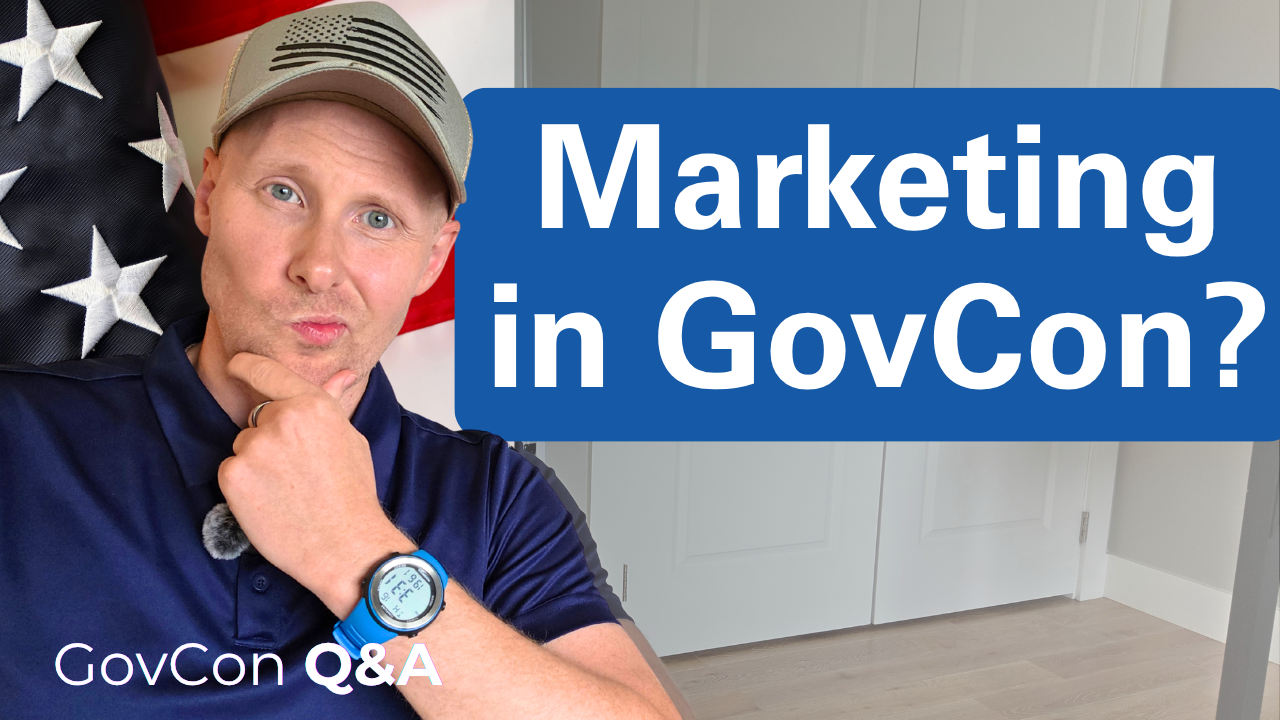
One of the biggest misconceptions in government contracting is that you need to spend your time marketing your business the same way you would in the commercial world.
You don't.
The contractors who consistently win federal contracts usually aren't the ones attending every conference, emailing capability statements to every agency, or spending thousands of dollars on marketing tools.
They're building relationships by consistently bidding on the same agencies, improving their proposals, and becoming familiar names over time.
That's the kind of marketing that actually leads to contract awards.
Here are some of the most common questions I get about marketing a government contracting business.
How do you actually market your government contracting business?
I think there are two types of marketing in government contracting.
The first is direct marketing.
That's emailing capability statements to anyone you can find, attending every government contracting conference hoping to meet someone who will award you a contract, and responding to Sources Sought notices before you've even built a bidding process.
I don't recommend that approach for most contractors.
Instead, I recommend indirect marketing.
Start by researching which agencies buy the services you want to sell. Focus on those agencies and bid on their requirements consistently. Every proposal you submit, every debrief you request, and every professional interaction you have with that agency builds familiarity over time.
You're not asking anyone to give you a contract.
You're becoming known as a contractor who consistently competes for their work and continuously improves.
That's how real relationships are built in government contracting.
What do most people recommend, and why do you disagree?
New contractors are constantly told they need a better capability statement, a GSA Schedule, an expensive website, fancy CRM software, or to spend all their time responding to Sources Sought notices.
I think those things are distractions for most beginners.
None of them replace the fundamentals.
If you aren't consistently identifying opportunities, writing quality proposals, improving your submissions, requesting debriefs, and building relationships with contracting officers, none of those marketing tools are going to make much difference.
Most of the things people call marketing are really supplements.
Supplements only help once you've already mastered the fundamentals.
Is it essential to have a strong capability statement?
Not at all.
I see contractors spend weeks trying to create the perfect capability statement before they've even submitted their first proposal.
That's backwards.
Spend a couple of hours creating a clean, professional capability statement and move on.
Your proposal wins contracts.
Your capability statement simply introduces your business.
Don't let perfection keep you from bidding.
What role does your company website play?
Very little when it comes to proposal evaluations.
Contracting officers aren't evaluating your website as part of your proposal. In many cases, your SAM registration serves as the government's primary source of information about your company.
Where a website does become valuable is when you're building credibility with potential teaming partners or subcontractors. If someone is considering working with you, they're probably going to search your company online.
A professional website helps establish credibility, but it isn't what wins federal contracts.
Don't confuse credibility with proposal evaluation.
How important are Woman Owned, Veteran Owned, 8(a), and HUBZone certifications?
These programs absolutely create opportunities.
But I still consider them supplements.
One thing I've noticed over the years is that contractors who pursue certifications are usually more serious about government contracting. They've invested time into learning the process and positioning their business.
That also means the competition inside many set aside programs can be stronger than people expect.
For most new contractors, I recommend focusing first on Total Small Business opportunities.
It's a free set aside, there's plenty of opportunity, and it allows you to develop the skills that matter most before expanding into additional certifications.
What's your opinion on GSA Schedules for new contractors?
Run away from them.
Seriously.
I think far too many new contractors are convinced they need a GSA Schedule before they've even learned how to win contracts.
Getting on Schedule takes time, money, and ongoing effort to maintain. If you haven't won roughly ten to twenty contracts yet, your time is almost certainly better spent learning how to identify opportunities, write competitive proposals, and build relationships with agencies.
I also want to caution contractors about the phone calls they receive saying the government is looking for companies in their state or that they can help you get awarded a GSA contract quickly.
Those calls are usually sales pitches. They're often very misleading and designed to convince inexperienced contractors to spend money on something they don't need yet.
Focus on winning contracts first.
The Schedule can come later if your business actually needs it.
Final Thoughts
Marketing in government contracting isn't about being seen everywhere.
It's about being seen consistently by the agencies that buy what you sell.
Research your target agencies. Bid on their opportunities. Request debriefs. Improve your proposals. Build professional relationships over time.
That's the kind of marketing that creates contract wins.
Everything else is just a supplement.

About Derek James
Derek James is the founder of GovKidMethod. By age 30, he had won 32 federal contracts worth more than $15 million. Since then, he's helped small businesses win more than $75 million in government contracts by teaching practical proposal writing, positioning, and bidding strategies that contractors can actually apply.
Ready to Go Further?
Reading about government contracting is one thing. Knowing exactly how to write winning proposals is another.
That's why I've made the first modules of my GovRFP Proposal Writing System available for free. They'll walk you through the foundation every contractor should understand before submitting bids.
Access the free GovRFP Proposal Writing System here:
www.govkidmethod.com/govrfp