
How to Go Full-Time and Break Through in Government Contracting
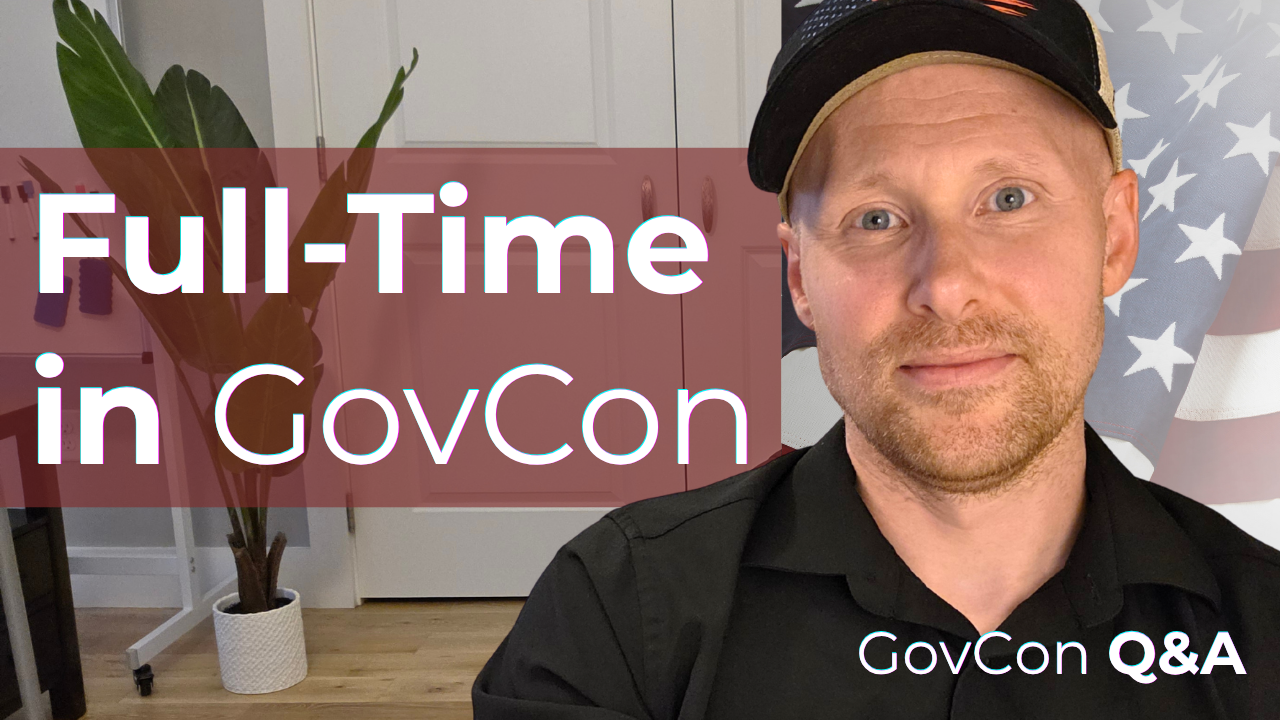
Almost every contractor reaches a point where they ask the same questions. When can I quit my job? Why am I only winning small contracts? Why do I feel stuck while other businesses seem to keep growing?
The answer usually isn't one big breakthrough. It's a series of small improvements that compound over time. The contractors who continue growing think differently, bid consistently, and are willing to change as their business evolves.
Here are some of the most common questions I get about making government contracting a full time business.
Can someone leave their job to do government contracting full time?
Absolutely, but don't make it your first goal.
Too many people focus on replacing their paycheck before they've built a predictable pipeline of work. Government contracting has ups and downs. There may be months where you win several contracts and months where you don't win any.
Instead of asking when you can quit your job, ask when your business has proven it can consistently support you.
The stronger your pipeline, your cash flow, and your confidence in your bidding process, the easier that decision becomes.
How do you go from winning a few small contracts to winning larger contracts?
Winning bigger contracts usually starts long before you submit the proposal.
As your business grows, your capabilities should grow with it. That means building stronger systems, improving your proposal process, expanding your team when necessary, and becoming more efficient at performing the work.
Every successful contract should make your business stronger than it was before.
The goal isn't simply to bid on larger contracts. It's to become the type of business that's capable of winning and performing them successfully.
What's the biggest difference between contractors who aren't winning enough and those who are?
Consistency.
The contractors who succeed don't submit one proposal every few months and hope for the best. They're constantly learning, improving, and putting themselves in position to win.
They review solicitations differently. They improve their proposals. They learn from losses. They keep bidding.
Over time, those small improvements create a huge gap between contractors who continue growing and those who stay in the same place year after year.
What do you mean when you say, "10 to 20 and you're in the money?"
Many contractors judge government contracting after submitting only a handful of proposals.
That's simply not enough.
Government contracting is a numbers game backed by continuous improvement. Every proposal teaches you something. Every loss gives you information. Every submission increases your chances of winning.
When I say "10 to 20 and you're in the money," I'm talking about building enough momentum to let the process start working in your favor. By that point, you've gained experience, improved your proposals, and given yourself multiple opportunities to succeed instead of relying on one bid to change everything.
If you could tell a contractor just one thing to grow, what would it be?
Double down on what works.
When you find something that's producing results, don't abandon it because you're chasing the next new strategy.
If a certain type of opportunity fits your business, keep pursuing similar work. If your proposal process is improving your win rate, continue refining it. If a marketing effort consistently brings in quality opportunities, invest more time into it.
Growth often comes from doing more of the right things instead of constantly looking for something different.
If you could help a contractor who feels stuck, what would you tell them?
What got you here is not going to be what gets you there.
One of the biggest reasons contractors hit a plateau is because they keep relying on the same habits that produced their earlier success. That approach works until it doesn't.
Business is constantly changing. Your competitors improve. Agencies change. Markets change. You have to continue evolving with them.
If you've been doing the same things for the past year and your results haven't changed, it's probably time to ask better questions.
Instead of asking, "Why am I not winning?" ask, "What do contractors who are winning do differently than I do?"
Instead of asking, "How do I get lucky?" ask, "What skills do I need to improve?"
Better questions usually lead to better answers. Better answers lead to better decisions.
The contractors who continue growing never stop being students of the game.
Final Thoughts
Building a full time government contracting business doesn't happen because of one big contract. It happens because you consistently improve your skills, submit quality proposals, learn from every opportunity, and adapt as your business grows.
The contractors who break through aren't always the smartest or the most experienced. They're usually the ones who refuse to stop learning and refuse to stop improving.

About Derek James
Derek James is the founder of GovKidMethod. By age 30, he had won 32 federal contracts worth more than $15 million. Since then, he's helped small businesses win more than $75 million in government contracts by teaching practical proposal writing, positioning, and bidding strategies that contractors can actually apply.
Ready to Go Further?
Reading about government contracting is one thing. Knowing exactly how to write winning proposals is another.
That's why I've made the first modules of my GovRFP Proposal Writing System available for free. They'll walk you through the foundation every contractor should understand before submitting bids.
Access the free GovRFP Proposal Writing System here:
www.govkidmethod.com/govrfp